
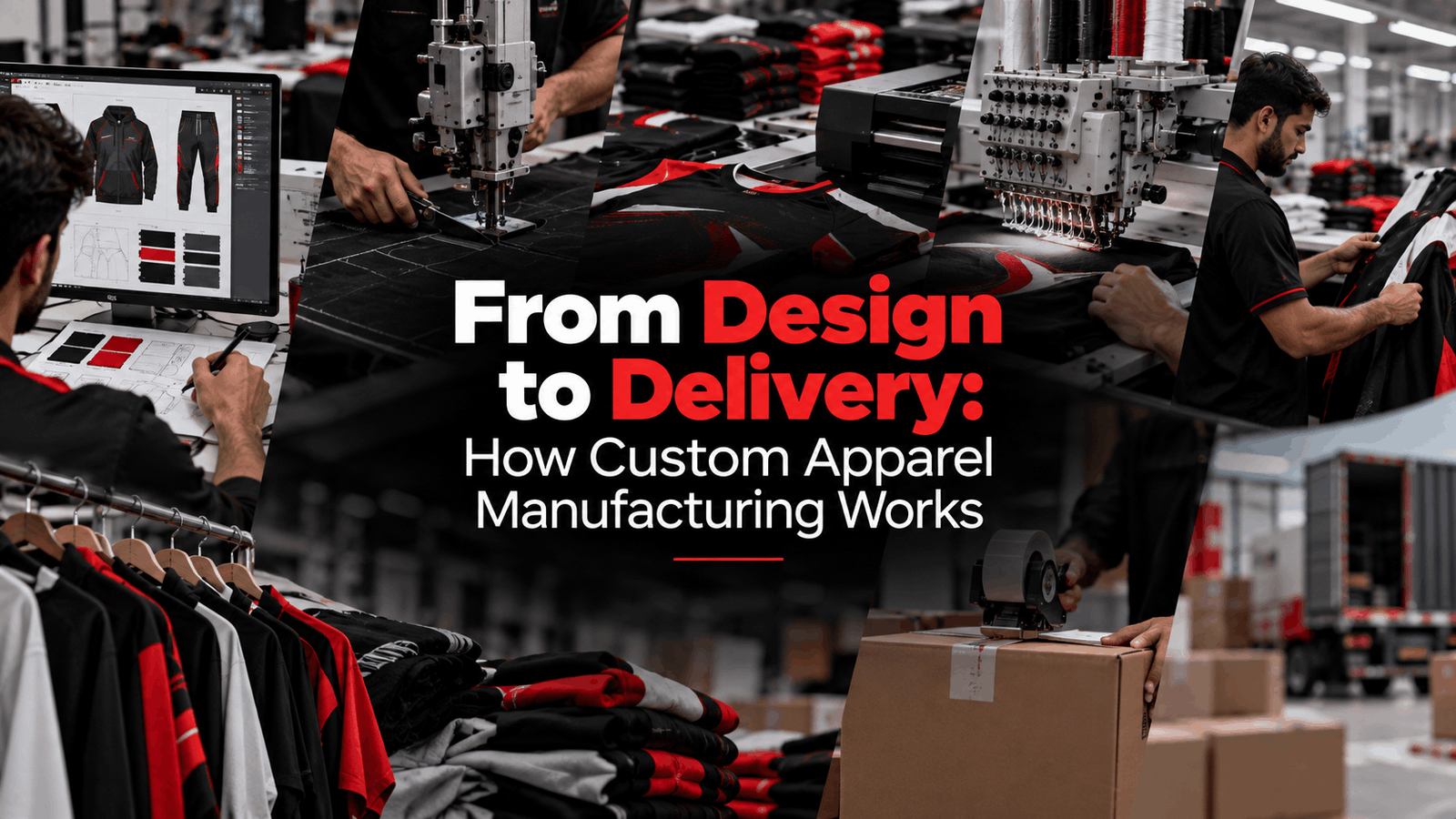
At Sonoroussports, our manufacturing process covers product development, material selection, pattern making, cutting, stitching, customization, finishing, quality inspection, packing, and production preparation.
Here is how the process generally works.
1. Product Concept and Development
Every garment begins with an idea.
Customers may start with:
- A sketch
- Existing sample
- Reference image
- Tech pack
- Digital artwork
- Product measurements
- Color combinations
During the development stage, important details such as materials, fit, construction, branding, and decoration techniques are established.
This stage is particularly important for custom clothing because small design details can significantly influence the finished product.
2. Fabric and Raw Material Selection
The next step is selecting appropriate materials.
Different apparel categories require different fabrics.
For example, streetwear may require heavier materials that provide structure, while activewear needs flexible and breathable fabrics.
Material selection can include:
- Cotton
- Polyester
- Lycra
- Spandex
- Fleece
- French terry
- Jersey
- Mesh
- Interlock
- Blended fabrics
Other raw materials can include zippers, buttons, elastic, drawcords, ribbing, Velcro, labels, threads, patches, and packaging materials.
3. Pattern Development and Sizing
Patterns determine the shape and dimensions of every garment component.
Pattern making is used to establish:
- Garment fit
- Sleeve shape
- Body width
- Length
- Shoulder construction
- Neck opening
- Trouser measurements
- Pocket positioning
Patterns can then be graded into multiple sizes such as XS, S, M, L, XL, XXL, and additional custom sizes.
Correct pattern development helps maintain consistent sizing throughout production.
4. Fabric Cutting
Once patterns are approved, fabric is prepared for cutting.
Multiple fabric layers may be placed together so garment panels can be cut efficiently.
Depending on production requirements, cutting can be performed using manual or automated cutting systems.
Accuracy is important because incorrectly cut panels can affect garment measurements and stitching.
5. Printing and Decoration
Depending on the design, garments may require decoration before or after stitching.
Common customization methods include:
Sublimation
Suitable for polyester-based sportswear and performance garments.
Screen Printing
Frequently used on streetwear, casual wear, T-shirts, hoodies, and sweatshirts.
DTF Printing
Useful for detailed graphics and custom designs.
Heat Transfer
Suitable for names, numbers, logos, and branding.
Embroidery
Often selected for premium logos, patches, uniforms, caps, polos, jackets, and accessories.
Choosing the correct technique depends on the fabric, artwork, quantity, and desired finish.
6. Stitching and Garment Construction
Cut panels are then assembled by sewing operators.
Different machines may be used for different operations, including:
- Lockstitch
- Overlock
- Flatlock
- Coverstitch
- Bartack
The required sewing technique depends on the garment type.
For example, performance apparel may require flexible stitching around high-movement areas, while heavy streetwear garments may need reinforced seams.
7. Trimming and Finishing
After stitching, garments move to finishing.
This stage can include:
- Cutting loose threads
- Checking seams
- Cleaning garments
- Pressing
- Adding labels
- Installing drawcords
- Attaching tags
- Final embroidery checks
- Folding preparation
Professional finishing helps improve presentation and overall product quality.
8. Quality Inspection
Before packing, products should be carefully inspected.
Quality-control teams may check:
- Stitching
- Measurements
- Fabric condition
- Color consistency
- Printing
- Embroidery
- Logo placement
- Labels
- Overall finishing
Products that do not match approved specifications may require correction before packing.
9. Private Labeling and Packaging
Private-label brands often require customized presentation.
Packaging options may include:
- Branded polybags
- Hang tags
- Barcode labels
- Size stickers
- Printed packaging
- Custom boxes
- Woven labels
- Care labels
Consistent packaging strengthens brand identity and improves the customer experience.
10. Final Packing and Shipment Preparation
After inspection, garments are folded, packed, counted, and prepared for shipment.
Packaging requirements vary depending on whether products are being delivered to wholesalers, retailers, sports teams, distributors, or direct-to-consumer brands.
Organized packing also helps reduce errors when handling multiple colors, designs, and sizes.
What Sonoroussports Manufactures
Our manufacturing categories include:
- Street Wear
- Sports Wear
- Martial Arts Wear
- Safety Wear
- Fitness Wear
- Casual Wear
- Bavarian Wear
- Bags
- Gloves
- Accessories
We work with businesses that require customized products, OEM manufacturing, and private-label solutions.
Conclusion
Successful custom apparel production depends on coordination between product development, raw material selection, cutting, stitching, branding, quality control, and final finishing.
At Sonoroussports, we focus on creating a structured manufacturing process that helps turn customer concepts into professionally finished apparel and gear.
From custom streetwear collections to sports uniforms, fitness wear, safety clothing, bags, gloves, and accessories, our manufacturing services are designed to support brands at different stages of growth.